Pediatric Airway Management

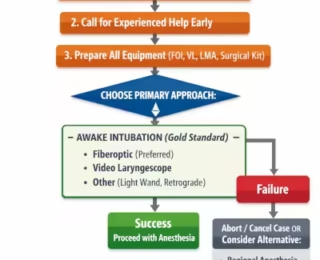
A 3-year-old child with recurrent croup presents for adenotonsillectomy. The child has a history of difficult intubation during previous anesthesia. Parents report occasional stridor during sleep and upper respiratory infections.

Continue reading

Cardiac Patient for Non-Cardiac Surgery

A 68-year-old male with ischemic heart disease, hypertension, and type 2 diabetes scheduled for elective laparoscopic cholecystectomy. He has a history of myocardial infarction 2 years ago and takes multiple cardiac medications.

Continue reading

TIVA – Total Intravenous Anesthesia

TIVA uses IV agents (propofol + remifentanil) for anesthesia without inhalational gases. Regimens: Propofol (TCI 2–6 mcg/mL or 100–200 mcg/kg/min) + remifentanil (TCI 2–6 ng/mL or 0.05–0.3 mcg/kg/min). Monitoring: BIS (40–60) ensures depth. Ideal for MH risk, PONV-prone patients, or neurosurgery. Enables precise titration and rapid emergence.

Continue reading

Spinal Anesthesia Procedure – A Step-by-Step Guide

Spinal Anaesthesia Procedure

Mastering Spinal Anesthesia: From Preparation to Completion Spinal anesthesia, also known as subarachnoid block, is a widely used technique in modern medical practice to provide regional anesthesia and pain relief for various surgical procedures. It involves injecting a local anesthetic into the subarachnoid space of the spinal canal, leading to…

Continue reading

Spinal Anesthesia – Anatomy & Physiology

Understanding the Spine: The Foundation of Spinal Anesthesia Spinal anesthesia is a cornerstone technique in regional anesthesia, but its safe execution requires deep understanding of spinal anatomy, physiological principles, and appropriate patient selection. Let’s explore the critical anatomical structures, physiological principles, and clinical applications that form the basis of this…

Continue reading

Cardiac Risk Index

The Cardiac Risk Index refers to clinical tools used to predict the risk of major adverse cardiac events (MACE) in patients undergoing non-cardiac surgery.

Continue reading

Divine Debut of Anesthesia?

Anesthesia and Scriptures

There are many instances in major religious texts that describe states of deep sleep, unconsciousness, or divinely induced trances that could be interpreted as analogous to the effects of anesthesia – Devine Debut. Having said that, the scriptures do not explicitly describe the use of modern anesthesia, as the concept…

Continue reading

Anesthesia Techniques

Anesthesiologists employ various techniques and medications to administer anesthesia, tailoring their approach based on the patient’s medical condition, the nature of the surgery, and the desired depth of anesthesia. The primary goal is to induce a state of unconsciousness or analgesia (pain relief) while maintaining physiological stability. Here are some…

Continue reading