Author: Med Doc
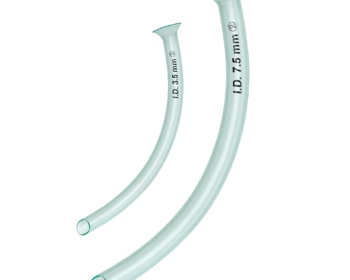
The Nasopharyngeal Airway (NPA or “Nasal Trumpet”)
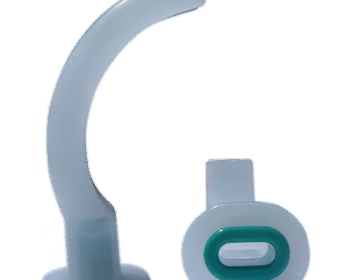
The Oropharyngeal Airway (OPA or Guedel Airway)
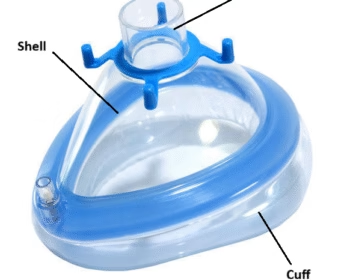
The Face Mask: The Unsung Hero of Airway Management
Trauma with Full Stomach
A 25-year-old male involved in a motor vehicle accident requires emergency laparotomy for suspected splenic injury. The patient ate a full meal 1 hour before the accident. Cervical spine precautions are necessary.
Obstetric Emergency
A 32-year-old pregnant patient at 38 weeks gestation presents for emergency cesarean section due to fetal distress. She has pre-eclampsia with BP 168/110 mmHg and proteinuria. Rapid sequence induction required.
Pediatric Airway Management
A 3-year-old child with recurrent croup presents for adenotonsillectomy. The child has a history of difficult intubation during previous anesthesia. Parents report occasional stridor during sleep and upper respiratory infections.
Cardiac Patient for Non-Cardiac Surgery
A 68-year-old male with ischemic heart disease, hypertension, and type 2 diabetes scheduled for elective laparoscopic cholecystectomy. He has a history of myocardial infarction 2 years ago and takes multiple cardiac medications.
TIVA – Total Intravenous Anesthesia
TIVA uses IV agents (propofol + remifentanil) for anesthesia without inhalational gases. Regimens: Propofol (TCI 2–6 mcg/mL or 100–200 mcg/kg/min) + remifentanil (TCI 2–6 ng/mL or 0.05–0.3 mcg/kg/min). Monitoring: BIS (40–60) ensures depth. Ideal for MH risk, PONV-prone patients, or neurosurgery. Enables precise titration and rapid emergence.
Complications of Spinal Anesthesia
While spinal anesthesia is generally safe, complications can occur. This comprehensive guide covers prevention strategies, early recognition