Pharmacology of Inhalational Anesthetics
[powerpoint id=”2241″]


[powerpoint id=”2241″]
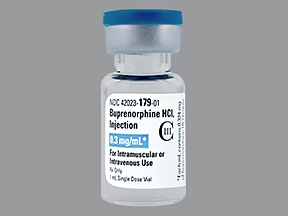
Buprenorphine is a unique and potent semi-synthetic opioid that has become an increasingly important tool in the anesthesiologist’s arsenal, particularly for pain management and in the perioperative care of patients with opioid use disorder (OUD).
Bupivacaine, marketed under the brand name Marcaine among others, is a long-acting, potent local anesthetic from the amide class. It is a cornerstone of regional anesthesia and pain management, valued for its duration of action but respected for its narrow therapeutic index and potential for severe cardiotoxicity.
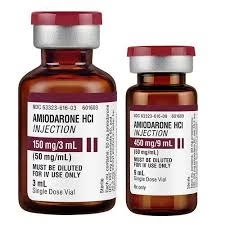
Amiodarone is one of the most effective and broad-spectrum antiarrhythmic drugs available. Classified as a Class III agent (potassium channel blocker) in the Vaughan-Williams classification, it is a truly “dirty” drug, exhibiting pharmacologic properties of all four classes.

From an anesthetic perspective, acetaminophen is not a “rescue” drug but rather a foundational component of a modern, balanced anesthetic plan. It is the most widely used analgesic-antipyretic in the world.

Non-Invasive Blood Pressure (NIBP) monitoring provides automated, intermittent measurements of a patient’s systolic, diastolic, and mean arterial pressure without the need to insert a catheter into an artery. It’s the automated equivalent of a clinician manually using a blood pressure cuff and stethoscope.

Anesthesiologists rely on a wide range of laboratory tests to assess patient fitness for anesthesia, guide intraoperative management, and manage postoperative care. The modern approach emphasizes targeted, indication-based testing rather than routine screening for all patients.
Anesthesia practice requires constant and precise conversion of units to ensure patient safety. Here is a comprehensive list of conversion tables and formulas routinely used by anesthesia providers.

The pulse oximeter is arguably one of the most significant advancements in patient monitoring, so ubiquitous and reliable that it’s often called the “fifth vital sign.”

In every code blue, in every ambulance, and in every operating room around the world, there is one device that stands as the universal symbol of respiratory rescue: the “Ambu Bag.” It’s a simple, handheld tool that represents the difference between life and death, a direct mechanical extension of a clinician’s will to breathe for another.