


Crack ‘The Core’ - 8 Key Sections Every Student Should Master
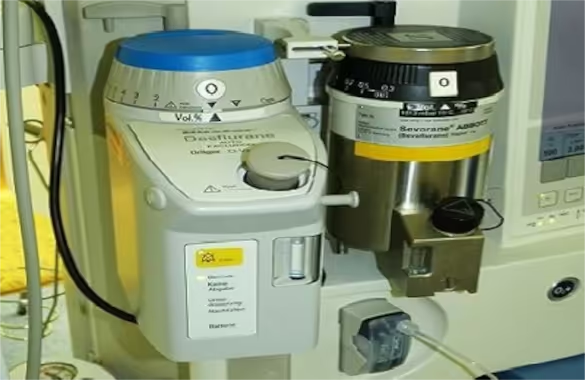
1. INSTRUMENTS & EQUIPMENT USED DURING ANESTHESIA
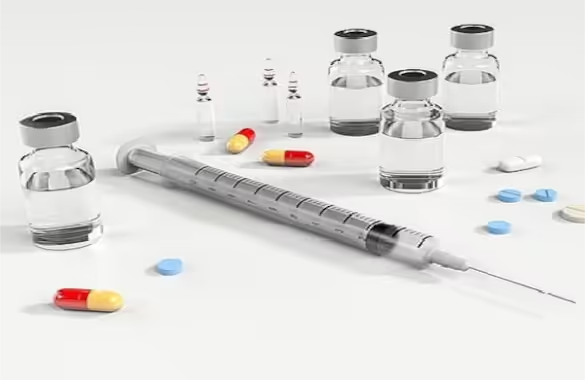
2. ANESTHESIA PHARMACOLOGY & DRUGS
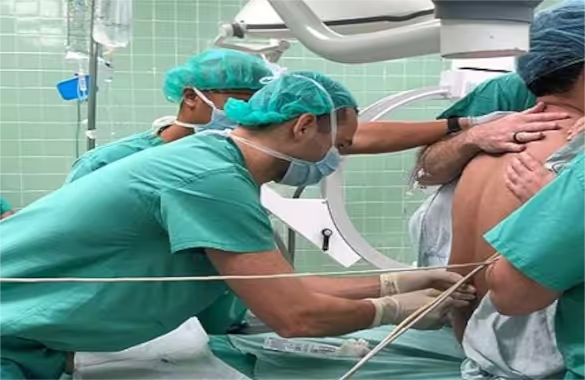
3. PROCEDURES IN ANESTHESIA PRACTICE
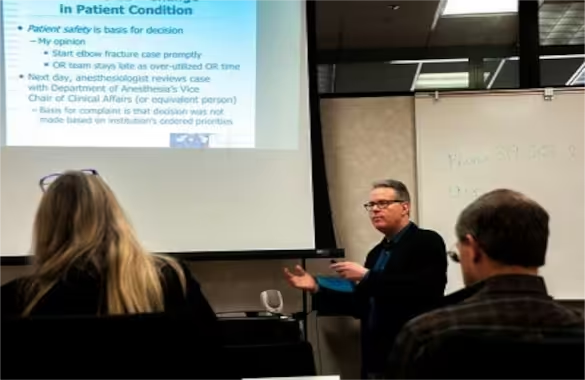
4. PRESENTATIONS IN ANESTHESIOLOGY
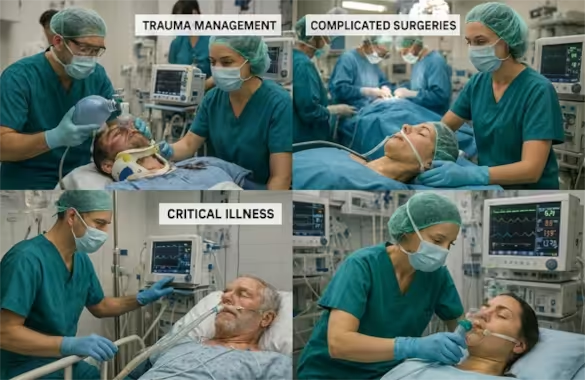
5. CLINICAL SCENARIOS DURING ANESTHESIA
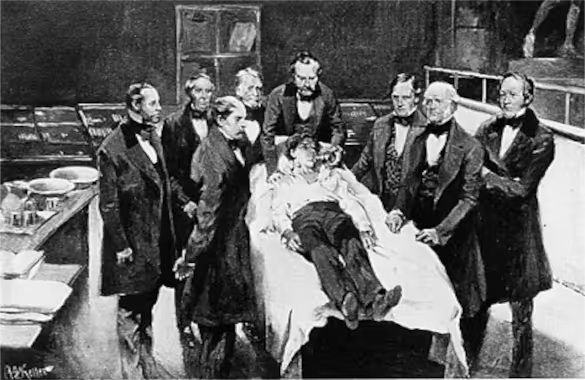
6. HISTORY OF ANESTHESIA

7. ANESTHESIA CLINICAL CALCULATOR
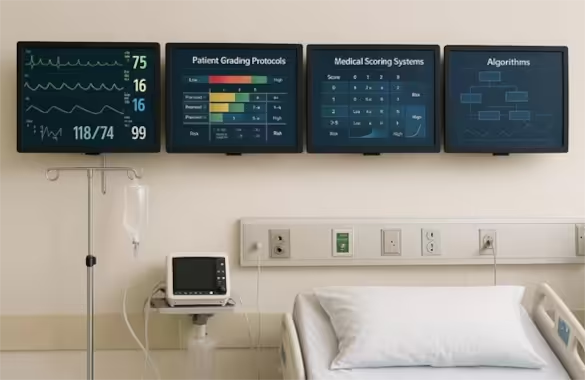
8. SCORING AND GRADING IN ANESTHESIA
Anesthesia Machine & Anesthesia Workstation
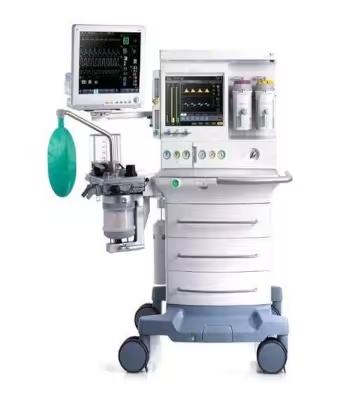 Welcome to the nerve center of the operating room. The anesthesia workstation, with its complex array of dials, circuits, and monitors, can seem like an intimidating beast. But what if you could master it? This comprehensive resource is your guide on a fascinating journey—from the historic, clunky elegance of the Boyle's machine to the sleek, intelligent workstations of Dräger, GE, and Mindray that define modern practice. We will demystify the physics, deconstruct the components, and build your confidence. This isn't just about learning a machine; it's about understanding your most critical partner in ensuring patient safety.
Our journey will be a methodical one. We'll start by laying a strong foundation, exploring the history and the core physics that govern every machine. From there, we'll build up your knowledge piece by piece, dissecting the classic anatomy of an anesthesia machine and mastering the circle breathing system. Only then will we leap into the modern era, comparing the sophisticated features of today's leading workstations. Each module is designed to build upon the last, transforming a daunting subject into a clear, manageable, and ultimately, masterable skill.
Pediatric Airway Management
A 3-year-old child with recurrent croup presents for adenotonsillectomy. The child has a history of difficult intubation during previous anesthesia. Parents report occasional stridor during sleep and upper respiratory infections.
Cardiac Patient for Non-Cardiac Surgery
A 68-year-old male with ischemic heart disease, hypertension, and type 2 diabetes scheduled for elective laparoscopic cholecystectomy. He has a history of myocardial infarction 2 years ago and takes multiple cardiac medications.
Xenon: The Noble Anesthetic Agent
Xenon is an anesthetic agent that stands out for its unique properties. This noble gas has gained attention in recent years as an ideal anesthetic with remarkable pharmacological properties.
TIVA – Total Intravenous Anesthesia
TIVA uses IV agents (propofol + remifentanil) for anesthesia without inhalational gases. Regimens: Propofol (TCI 2–6 mcg/mL or 100–200 mcg/kg/min) + remifentanil (TCI 2–6 ng/mL or 0.05–0.3 mcg/kg/min). Monitoring: BIS (40–60) ensures depth. Ideal for MH risk, PONV-prone patients, or neurosurgery. Enables precise titration and rapid emergence.
Complications of Spinal Anesthesia
While spinal anesthesia is generally safe, complications can occur. This comprehensive guide covers prevention strategies, early recognition
Spinal Anesthesia Procedure – A Step-by-Step Guide

Mastering Spinal Anesthesia: From Preparation to Completion Spinal anesthesia, also known as subarachnoid block, is a widely used technique in modern medical practice to provide regional anesthesia and pain relief for various surgical procedures. It involves injecting a local anesthetic into the subarachnoid space of the spinal canal, leading to…
Spinal Anesthesia – Anatomy & Physiology
Understanding the Spine: The Foundation of Spinal Anesthesia Spinal anesthesia is a cornerstone technique in regional anesthesia, but its safe execution requires deep understanding of spinal anatomy, physiological principles, and appropriate patient selection. Let’s explore the critical anatomical structures, physiological principles, and clinical applications that form the basis of this…
Cardiac Risk Index
The Cardiac Risk Index refers to clinical tools used to predict the risk of major adverse cardiac events (MACE) in patients undergoing non-cardiac surgery.
Disclaimer!
The information provided on this platform, including but not limited to articles, case studies, clinical scenarios, guidelines, and multimedia content, is intended for educational and informational purposes only.
The authors and editors of this material have made every effort to ensure the accuracy of treatments, drugs, and dosage regimens that conform to currently accepted standards. However, due to continual changes in information resulting from ongoing research and clinical experience, unique aspects of individual clinical situations, as well as the potential for human error; readers must exercise personal judgment when making a clinical decision.
This website may contain third-party information or links to other internet websites. We do not control nor assume responsibility for any third-party content provided nor content on linked Internet websites.
We strongly recommend the visitors of this website to go through its Detailed 'Disclaimer' and 'Terms of Use'.
By accessing, browsing, or using this website, you acknowledge that you have read, understood, and agreed to be bound by the 'Disclaimer' and 'Terms of Use'. If you do not agree with these terms, you must NOT use this website.