


Crack ‘The Core’ - 9 Key Sections Every Anaesthesia Student Should Master
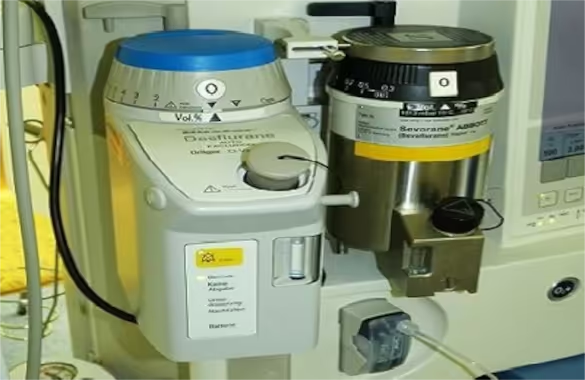
INSTRUMENTS & EQUIPMENT USED DURING ANESTHESIA
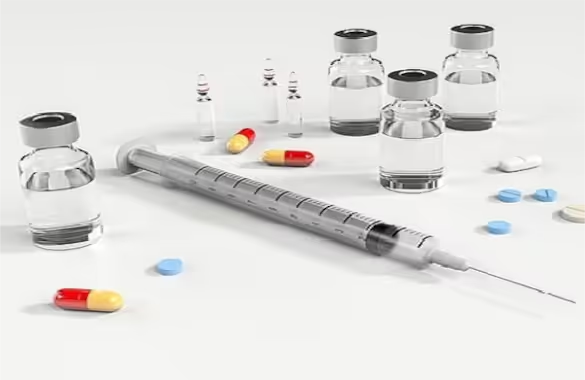
ANESTHESIA PHARMACOLOGY & DRUGS
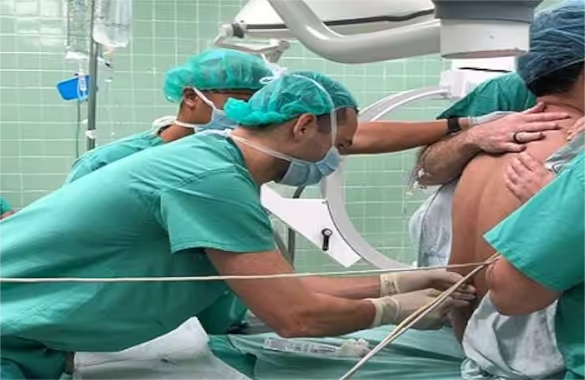
PROCEDURES IN ANESTHESIA PRACTICE
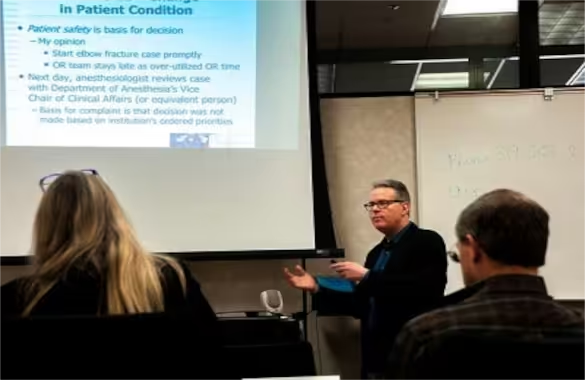
PRESENTATIONS IN ANESTHESIOLOGY
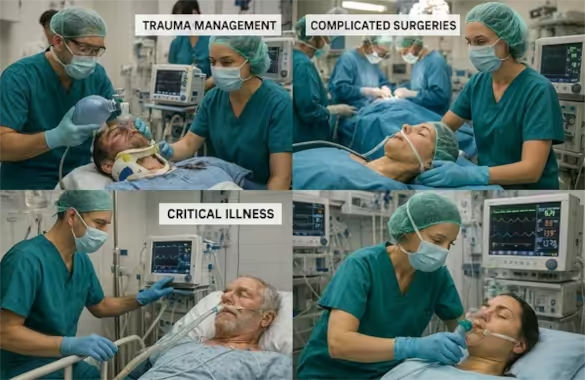
CLINICAL SCENARIOS DURING ANESTHESIA
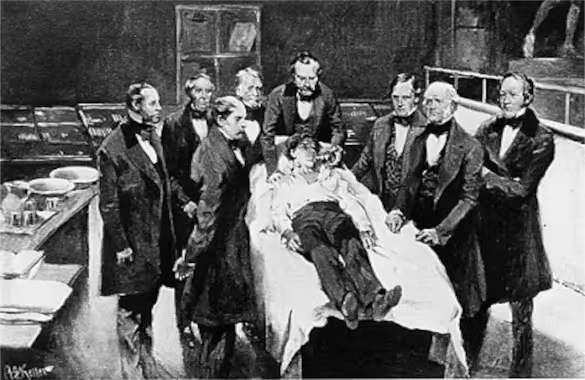
HISTORY OF ANESTHESIA

ANESTHESIA CLINICAL CALCULATOR
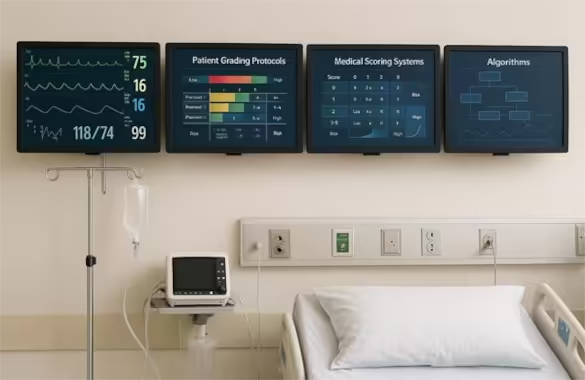
SCORING AND GRADING IN ANESTHESIA
Anesthesia Machine & Anesthesia Workstation
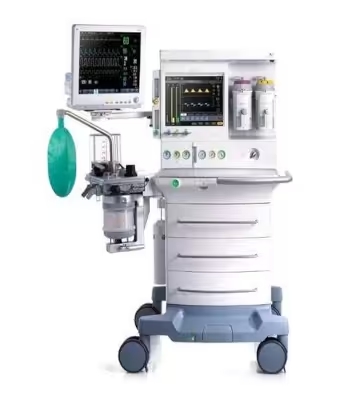 Welcome to the nerve center of the operating room. The anesthesia workstation, with its complex array of dials, circuits, and monitors, can seem like an intimidating beast. But what if you could master it? This comprehensive resource is your guide on a fascinating journey—from the historic, clunky elegance of the Boyle's machine to the sleek, intelligent workstations of Dräger, GE, and Mindray that define modern practice. We will demystify the physics, deconstruct the components, and build your confidence. This isn't just about learning a machine; it's about understanding your most critical partner in ensuring patient safety.
Our journey will be a methodical one. We'll start by laying a strong foundation, exploring the history and the core physics that govern every machine. From there, we'll build up your knowledge piece by piece, dissecting the classic anatomy of an anesthesia machine and mastering the circle breathing system. Only then will we leap into the modern era, comparing the sophisticated features of today's leading workstations. Each module is designed to build upon the last, transforming a daunting subject into a clear, manageable, and ultimately, masterable skill.
Discovery of Chloroform
On 4 November 1847, Edinburgh obstetrician James Young Simpson, with assistants Keith and Duncan, inhaled chloroform at his dining table and collapsed unconscious. Waking, Simpson declared: “This is far stronger and better than ether.” Within days, he had used it in childbirth, published his findings, and transformed anaesthesia. Chloroform rapidly displaced ether worldwide—though Simpson’s gamble nearly cost him his life.
Ether Day
On October 16, 1846, at Massachusetts General Hospital, William T.G. Morton administered ether to Gilbert Abbott, enabling painless tumor excision. As Abbott awoke pain-free, surgeon John Collins Warren declared: “Gentlemen, this is no humbug.” Ether Day launched the global anaesthesia revolution, transforming surgery from agonizing ordeal to compassionate healing.
The Unsung Heroes of Anesthesia
In 1842, four years before Morton’s famous demonstration, Georgia physician Crawford Long used ether to remove a neck tumor—but never published his discovery. His modesty and rural isolation cost him international fame. The bitter priority dispute that followed reveals a timeless truth: discovery without dissemination changes nothing.
The Gaseous Beginnings – Nitrous Oxide & Ether
In the late 18th century, Humphry Davy discovered nitrous oxide’s analgesic properties and prophetically suggested its surgical use—yet his insight lay dormant for decades. Meanwhile, ether remained a curiosity. From carnival entertainment to clinical reality, these gases awaited visionary champions to transform observation into the foundation of modern anaesthesia.
History of Anaesthesia
Before ether, ancient civilizations battled surgical pain with opium, mandrake, cannabis, and wine—substances used empirically for millennia. From Sumerian “joy plant” to Hua Tuo’s cannabis brew and Avicenna’s narcotic sponge, these early remedies laid the pharmacological foundation for modern anaesthesia, driven by humanity’s timeless quest to conquer suffering.
Transesophageal Echocardiography
Transesophageal echocardiography (TEE) is a semi-invasive perioperative monitor providing real-time, high-resolution imaging of cardiac anatomy and hemodynamics. Using a probe positioned in the esophagus, it guides surgical decision-making, detects complications, and assesses valve function. Mastery requires systematic image acquisition, Doppler interpretation, and vigilance for esophageal injury and arrhythmias.
Cell Salvage
Cell salvage collects, washes, and reinfuses a patient’s own shed blood during surgery, reducing allogeneic transfusion requirements. It preserves red cell mass while removing plasma, platelets, and anticoagulants. Contraindications include malignancy, bowel contamination, and amniotic fluid. Mastery requires proper setup, meticulous suctioning, vigilant monitoring for coagulopathy and hypocalcemia during reinfusion.
One-Lung Ventilation
One-lung ventilation (OLV) is a thoracic anesthetic technique achieving selective lung isolation using double-lumen tubes or bronchial blockers. It enables surgical access by collapsing the operative lung while ventilating the other. Mastery requires fiberoptic confirmation, lung-protective ventilation (Vt 4–6 mL/kg), and a systematic algorithm to rescue hypoxemia from shunt and malposition.
Disclaimer!
The information provided on this platform, including but not limited to articles, case studies, clinical scenarios, guidelines, and multimedia content, is intended for educational and informational purposes only.
The authors and editors of this material have made every effort to ensure the accuracy of treatments, drugs, and dosage regimens that conform to currently accepted standards. However, due to continual changes in information resulting from ongoing research and clinical experience, unique aspects of individual clinical situations, as well as the potential for human error; readers must exercise personal judgment when making a clinical decision.
This website may contain third-party information or links to other internet websites. We do not control nor assume responsibility for any third-party content provided nor content on linked Internet websites.
We strongly recommend the visitors of this website to go through its Detailed 'Disclaimer' and 'Terms of Use'.
By accessing, browsing, or using this website, you acknowledge that you have read, understood, and agreed to be bound by the 'Disclaimer' and 'Terms of Use'. If you do not agree with these terms, you must NOT use this website.