


Crack ‘The Core’ - 9 Key Sections Every Anaesthesia Student Should Master
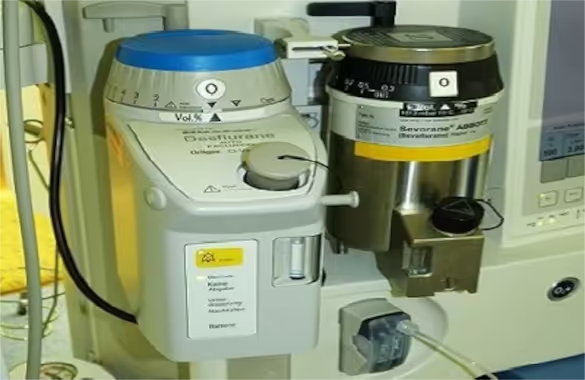
INSTRUMENTS & EQUIPMENT USED DURING ANESTHESIA
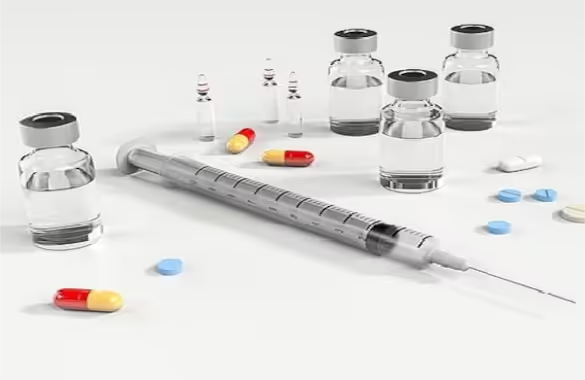
ANESTHESIA PHARMACOLOGY & DRUGS
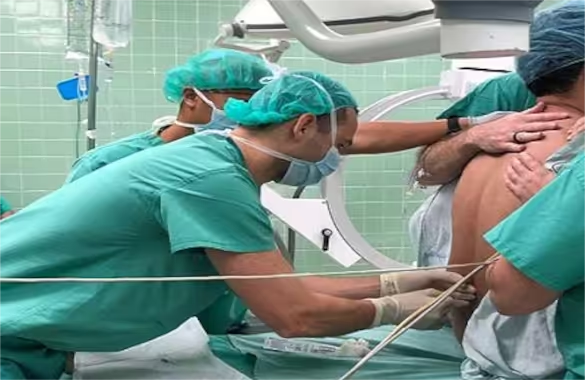
PROCEDURES IN ANESTHESIA PRACTICE
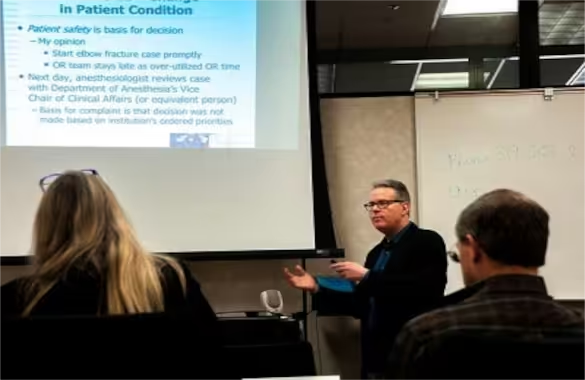
PRESENTATIONS IN ANESTHESIOLOGY
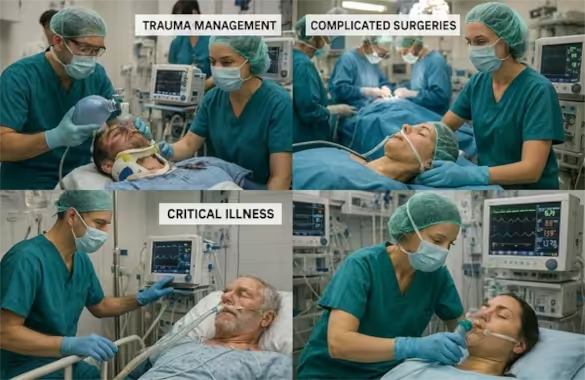
CLINICAL SCENARIOS DURING ANESTHESIA
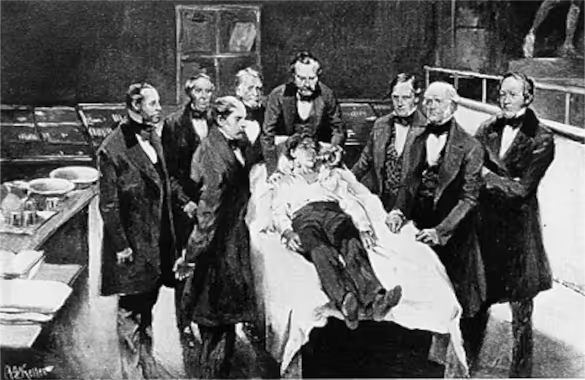
HISTORY OF ANESTHESIA

ANESTHESIA CLINICAL CALCULATOR
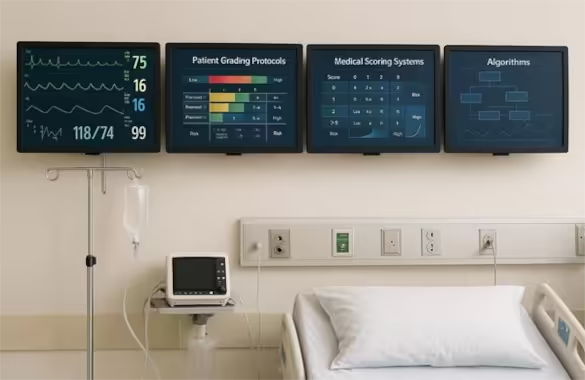
SCORING AND GRADING IN ANESTHESIA
Anesthesia Machine & Anesthesia Workstation
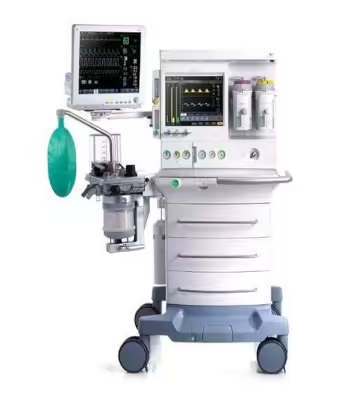 Welcome to the nerve center of the operating room. The anesthesia workstation, with its complex array of dials, circuits, and monitors, can seem like an intimidating beast. But what if you could master it? This comprehensive resource is your guide on a fascinating journey—from the historic, clunky elegance of the Boyle's machine to the sleek, intelligent workstations of Dräger, GE, and Mindray that define modern practice. We will demystify the physics, deconstruct the components, and build your confidence. This isn't just about learning a machine; it's about understanding your most critical partner in ensuring patient safety.
Our journey will be a methodical one. We'll start by laying a strong foundation, exploring the history and the core physics that govern every machine. From there, we'll build up your knowledge piece by piece, dissecting the classic anatomy of an anesthesia machine and mastering the circle breathing system. Only then will we leap into the modern era, comparing the sophisticated features of today's leading workstations. Each module is designed to build upon the last, transforming a daunting subject into a clear, manageable, and ultimately, masterable skill.
Procedural Sedation
Procedural sedation requires achieving moderate (conscious) sedation—where patients remain responsive and protect their airways—through meticulous pre-procedural assessment, continuous monitoring by a dedicated provider, and careful drug titration. Mastery demands pharmacological knowledge, airway management skills, and readiness to rescue patients from unintended deeper sedation levels at any moment.
Deep Sedation
Deep sedation suppresses consciousness so patients respond only to painful stimuli. Airway and ventilation may be compromised. Achieve it with propofol or ketamine, mandatory capnography, and preoxygenation. Airway rescue equipment must be ready. Unlike conscious sedation, deep sedation requires two providers and carries general anesthesia‑level risks.
Conscious Sedation
Conscious sedation is a drug-induced state where patients respond purposefully to commands and maintain their airway. Achieve it by patient selection, slow IV titration (e.g., midazolam, propofol), continuous monitoring (SpO₂, capnography), and rescue readiness. Avoid deep sedation by frequent verbal assessment.
Video Laryngoscopy
Video laryngoscopy offers a superior glottic view without aligning oral, pharyngeal, and laryngeal axes. Ideal for difficult airways, cervical spine precautions, and teaching, VL is a powerful rescue and primary tool. Master tube delivery—the view is only half the battle.
Difficult Airway Algorithm
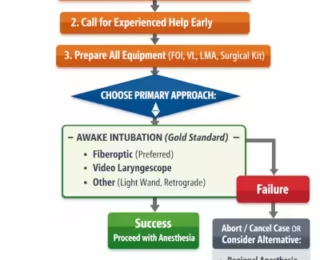
The Difficult Airway Algorithm provides a structured rescue roadmap from airway assessment to CICO crisis. Master the two pathways: anticipated (awake intubation) and unanticipated (optimize, limit attempts, ventilate, escalate). Remember: three attempts, call early, and know when to cut.
Rapid Sequence Intubation
Rapid Sequence Intubation (RSI) minimizes aspiration risk by inducing unconsciousness and paralysis nearly simultaneously, with no mask ventilation between. Mastering RSI requires disciplined adherence to the “7 Ps,” excellent pre-oxygenation, immediate confirmation with capnography, and a rehearsed plan for failed intubation.
Fiberoptic Intubation
Fiberoptic intubation is the cornerstone of managing the anticipated difficult airway. By visualizing the glottis without aligning oral, pharyngeal, or laryngeal axes, it enables awake or anesthetized intubation. Mastery requires deliberate practice, topical anesthesia skills, and a clear backup plan.
Supraglottic Airway Placement
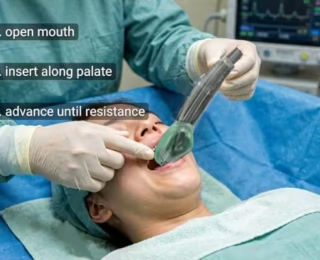
The supraglottic airway (SGA) sits above the glottis, providing rapid, hemodynamically stable ventilation for short, low‑risk cases. Master LMA and i‑gel insertion, cuff management, and troubleshooting leaks or obstruction. SGAs are critical rescue devices in “cannot intubate, cannot ventilate” scenarios. Never use with a full stomach.
Disclaimer!
The information provided on this platform, including but not limited to articles, case studies, clinical scenarios, guidelines, and multimedia content, is intended for educational and informational purposes only.
The authors and editors of this material have made every effort to ensure the accuracy of treatments, drugs, and dosage regimens that conform to currently accepted standards. However, due to continual changes in information resulting from ongoing research and clinical experience, unique aspects of individual clinical situations, as well as the potential for human error; readers must exercise personal judgment when making a clinical decision.
This website may contain third-party information or links to other internet websites. We do not control nor assume responsibility for any third-party content provided nor content on linked Internet websites.
We strongly recommend the visitors of this website to go through its Detailed 'Disclaimer' and 'Terms of Use'.
By accessing, browsing, or using this website, you acknowledge that you have read, understood, and agreed to be bound by the 'Disclaimer' and 'Terms of Use'. If you do not agree with these terms, you must NOT use this website.