Dexamethasone

Clinical effects of Dexamethasone

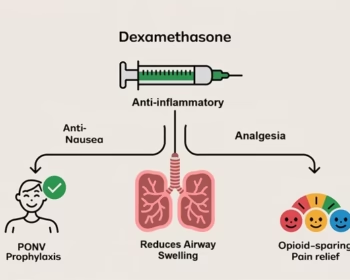
Dexamethasone is a long-acting glucocorticoid essential for anesthesiologists. It’s a cornerstone of ERAS protocols, providing potent prophylaxis against PONV, reducing airway and tissue edema, and offering opioid-sparing analgesia. While highly effective, its use requires careful monitoring for perioperative hyperglycemia, especially in diabetic patients.

Continue reading

Dobutamine

Mechanism of Action of Dobutamine

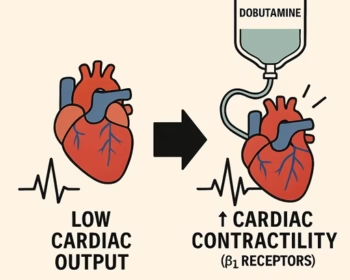
Dobutamine is a potent synthetic inotrope primarily acting on β1-adrenergic receptors to dramatically increase cardiac contractility. Its principal role is in managing acute decompensated heart failure and other low cardiac output states, where the therapeutic goal is to boost the heart’s pumping force without significantly increasing vascular resistance.

Continue reading

Dopamine

Mechanism of Action of Dopamine

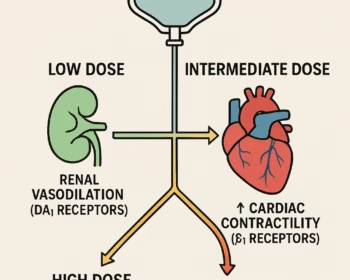
Dopamine is a potent endogenous neurotransmitter used clinically as a vasopressor and inotrope, uniquely characterized by its dose-dependent effects on the cardiovascular system. At low doses, it acts on dopaminergic receptors to increase renal blood flow; at intermediate doses, it stimulates β1-receptors to boost cardiac contractility; and at high doses, it activates α1-receptors to cause potent vasoconstriction.

Continue reading

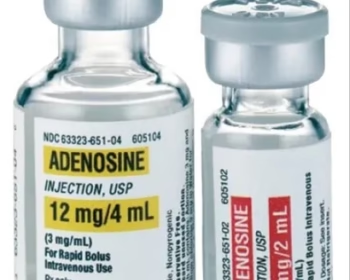
Adenosine

Adenosine is an endogenous purine nucleoside that plays a vital role in cellular energy metabolism (as part of ATP) and neuromodulation. In pharmacology, it is a unique and powerful antiarrhythmic drug used for the rapid termination of specific supraventricular tachycardias (SVTs).

Continue reading

Atropine

Atropine is a naturally occurring tropane alkaloid derived from the deadly nightshade plant (Atropa belladonna). As the prototypical anticholinergic agent, it is a fundamental drug in anesthesia practice.

Continue reading

Adrenaline (Epinephrine)

Epinephrine, commonly known by its trade name Adrenaline, is an endogenous catecholamine and one of the most potent, rapid-acting, and essential drugs in the anesthesiologist’s arsenal.

Continue reading

Nitrous Oxide

Nitrous oxide (N₂O) is frequently encountered in today’s clinical practice. This colorless, non-flammable gas has a fascinating history and remains one of the oldest anesthetic agents still in use today. It was first synthesized by English chemist Joseph Priestley in 1772, though he didn’t recognize its potential medical applications.

Continue reading

Endotracheal Tube

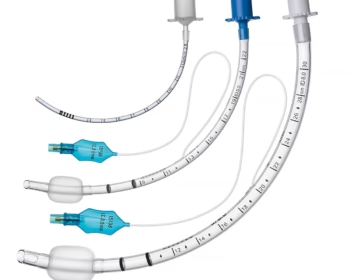
Endotracheal Tube

The endotracheal tube has evolved from a simple metal cannula to a sophisticated, highly specialized medical device. Its development has paralleled and enabled the advancement of surgery, critical care, and emergency medicine.

Continue reading

Propofol

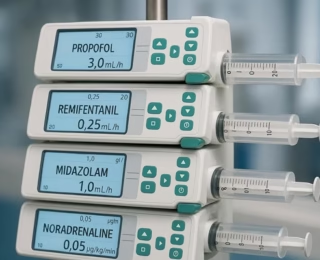
If there’s one drug you need to know inside and out, it’s this one – Propofol. It’s in every OR, every GI lab, and every ICU. It’s elegant, fast, and powerful. But with great power comes great responsibility (and significant hypotension).

Continue reading