


Crack ‘The Core’ - 9 Key Sections Every Anaesthesia Student Should Master
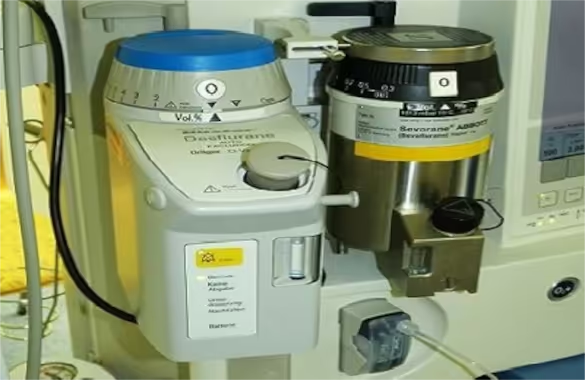
INSTRUMENTS & EQUIPMENT USED DURING ANESTHESIA
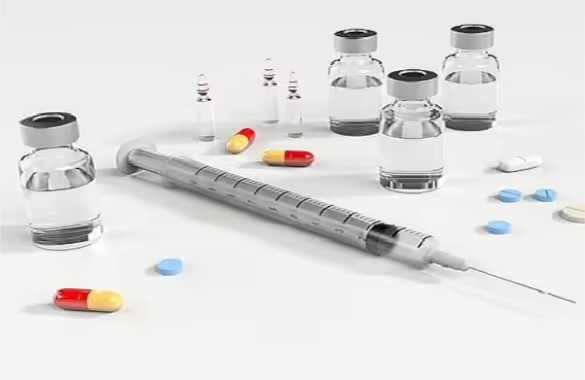
ANESTHESIA PHARMACOLOGY & DRUGS
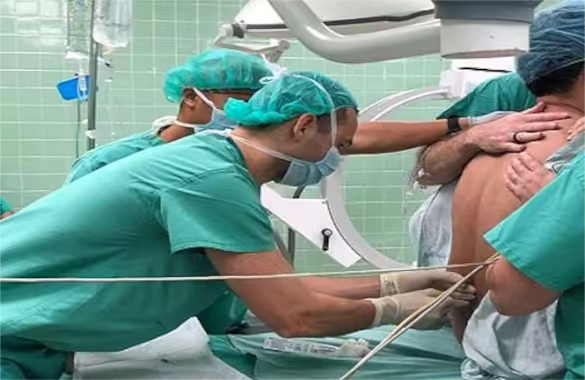
PROCEDURES IN ANESTHESIA PRACTICE
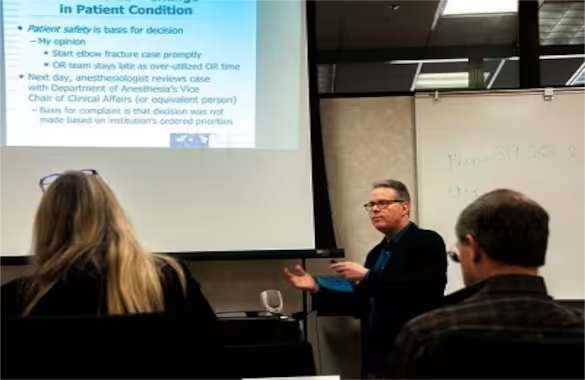
PRESENTATIONS IN ANESTHESIOLOGY
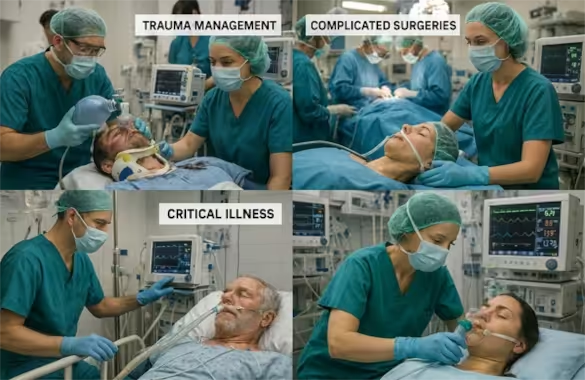
CLINICAL SCENARIOS DURING ANESTHESIA
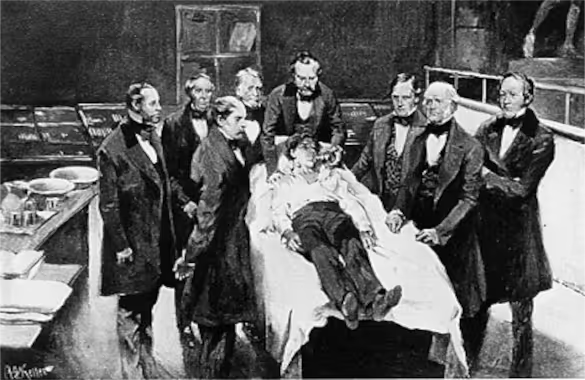
HISTORY OF ANESTHESIA

ANESTHESIA CLINICAL CALCULATOR
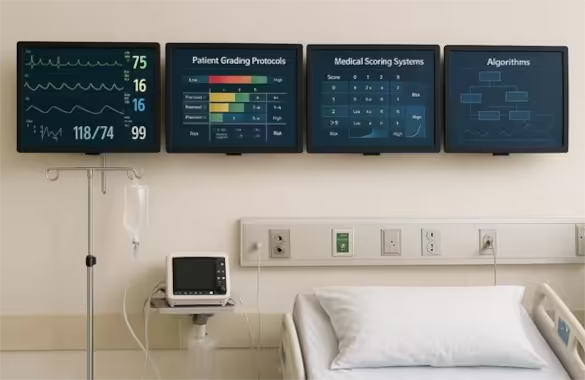
SCORING AND GRADING IN ANESTHESIA
Anesthesia Machine & Anesthesia Workstation
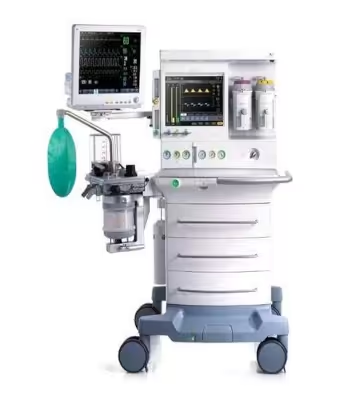 Welcome to the nerve center of the operating room. The anesthesia workstation, with its complex array of dials, circuits, and monitors, can seem like an intimidating beast. But what if you could master it? This comprehensive resource is your guide on a fascinating journey—from the historic, clunky elegance of the Boyle's machine to the sleek, intelligent workstations of Dräger, GE, and Mindray that define modern practice. We will demystify the physics, deconstruct the components, and build your confidence. This isn't just about learning a machine; it's about understanding your most critical partner in ensuring patient safety.
Our journey will be a methodical one. We'll start by laying a strong foundation, exploring the history and the core physics that govern every machine. From there, we'll build up your knowledge piece by piece, dissecting the classic anatomy of an anesthesia machine and mastering the circle breathing system. Only then will we leap into the modern era, comparing the sophisticated features of today's leading workstations. Each module is designed to build upon the last, transforming a daunting subject into a clear, manageable, and ultimately, masterable skill.
APACHE II
The APACHE II score quantifies ICU illness severity using worst 24-hour physiology (12 variables), age, and chronic health points (0–71 total). Higher scores predict higher in-hospital mortality (e.g., ≥35 → >80%). It enables risk stratification, ICU benchmarking via standardized mortality ratio, and research—but is a static snapshot, not a dynamic monitoring tool.
Confusion Assessment Method for the ICU (CAM-ICU)
The CAM-ICU is a validated 2-minute bedside tool for detecting delirium in ventilated and sedated ICU/PACU patients. Diagnosis requires acute/fluctuating course (Feature 1) plus inattention (Feature 2), plus either disorganized thinking (Feature 3) or altered consciousness (Feature 4). It captures both hyperactive and commonly missed hypoactive delirium subtypes.
Ramsay Sedation Scale
The Ramsay Sedation Scale (1–6) is a foundational tool assessing sedation depth from agitation to unarousability. Using voice and glabellar tap, it targets Ramsay 2 (calm/cooperative) for recovery or 3–4 for ventilated patients. Though historically significant, its subjective nature and lack of agitation-specific scoring limit its use versus modern scales like RASS.
Richmond Agitation-Sedation Scale
The Richmond Agitation-Sedation Scale (RASS) is a 10-point tool (+4 to -5) standardizing consciousness assessment in PACU and ICU. Using a validated algorithm—observe, call name, then physical stimulation—it distinguishes agitation from sedation. Target RASS -1 to 0 for ventilated patients, enabling safe sedation vacations and early delirium detection.
Fast-Track Criteria
Fast-track criteria enable safe transition of stable patients from Phase I PACU to lower-acuity care. Using the Modified Aldrete Score (≥9/10) alongside White Criteria (pain, PONV, bleeding), clinicians can accelerate recovery without compromising safety—provided strict exclusion criteria and clinical judgment are upheld.
Post-Anesthetic Discharge Scoring System (PADSS)
The Post-Anesthetic Discharge Scoring System (PADSS) assesses day surgery discharge readiness across six domains: Vital Signs, Ambulation, Nausea/Vomiting, Pain, Surgical Bleeding, and Oral Intake/Voiding. Each scored 0-2, total ≥9 indicates safe discharge. Anaesthesia trainees use it alongside home environment and escort assessment to prevent premature discharge and complications after ambulatory surgery.
Aldrete Post-Anesthesia Recovery Score
The Modified Aldrete Score assesses PACU discharge readiness across five domains: Activity (0-2), Respiration (0-2), Circulation (0-2), Consciousness (0-2), and SpO₂ (0-2). Total score ranges 0-10; ≥9 indicates adequate recovery for discharge. Anaesthesia trainees use it alongside pain, PONV, and specific surgical assessments to ensure safe patient transition from the PACU.
Bromage Scale & Modified Bromage Scale
The Modified Bromage Scale grades motor block after neuraxial anaesthesia: Grade 0 (full straight leg raise, no block), Grade 1 (can flex knee, no SLR), Grade 2 (can move feet/toes only), Grade 3 (no foot/toe movement). It guides ambulation, monitors block regression, and detects complications. Anaesthesia trainees use it alongside sensory assessment for safe neuraxial management.
Disclaimer!
The information provided on this platform, including but not limited to articles, case studies, clinical scenarios, guidelines, and multimedia content, is intended for educational and informational purposes only.
The authors and editors of this material have made every effort to ensure the accuracy of treatments, drugs, and dosage regimens that conform to currently accepted standards. However, due to continual changes in information resulting from ongoing research and clinical experience, unique aspects of individual clinical situations, as well as the potential for human error; readers must exercise personal judgment when making a clinical decision.
This website may contain third-party information or links to other internet websites. We do not control nor assume responsibility for any third-party content provided nor content on linked Internet websites.
We strongly recommend the visitors of this website to go through its Detailed 'Disclaimer' and 'Terms of Use'.
By accessing, browsing, or using this website, you acknowledge that you have read, understood, and agreed to be bound by the 'Disclaimer' and 'Terms of Use'. If you do not agree with these terms, you must NOT use this website.