


Crack ‘The Core’ - 8 Key Sections Every Student Should Master
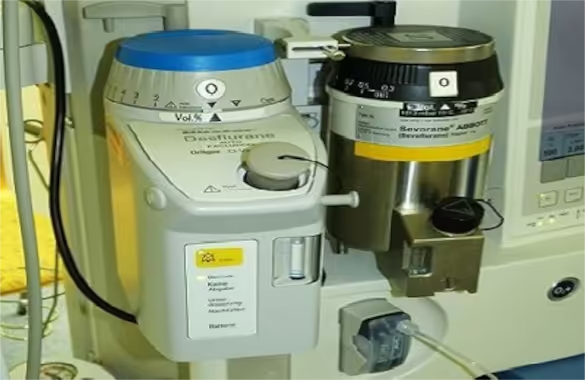
1. INSTRUMENTS & EQUIPMENT USED DURING ANESTHESIA
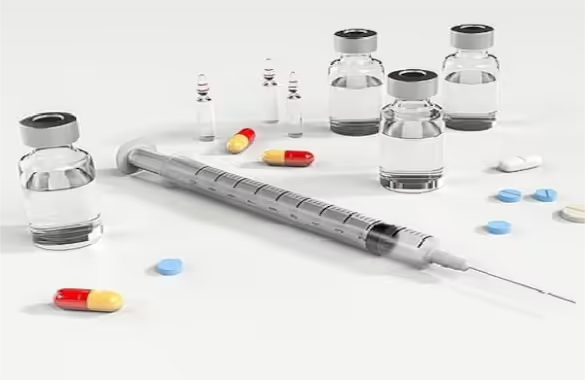
2. ANESTHESIA PHARMACOLOGY & DRUGS
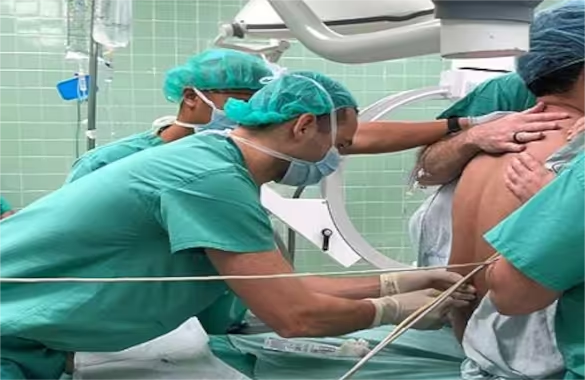
3. PROCEDURES IN ANESTHESIA PRACTICE
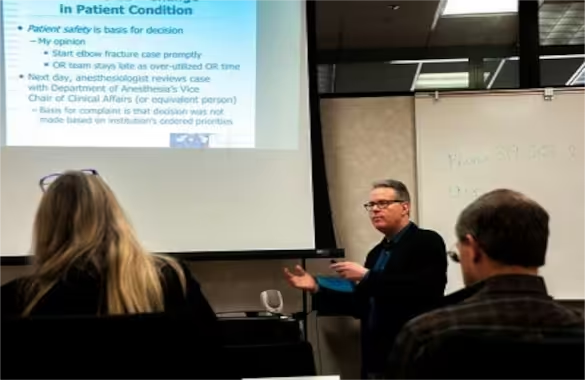
4. PRESENTATIONS IN ANESTHESIOLOGY
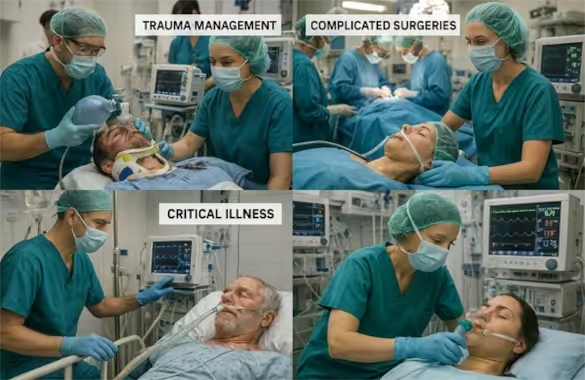
5. CLINICAL SCENARIOS DURING ANESTHESIA
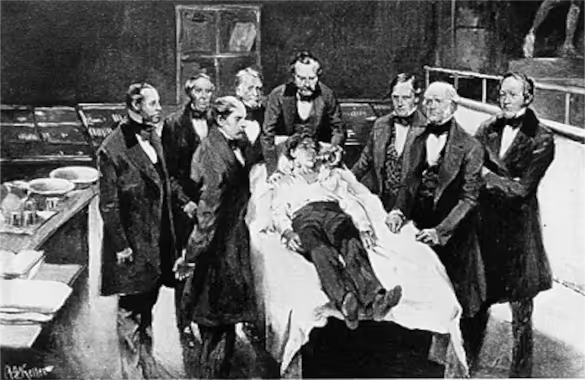
6. HISTORY OF ANESTHESIA

7. ANESTHESIA CLINICAL CALCULATOR
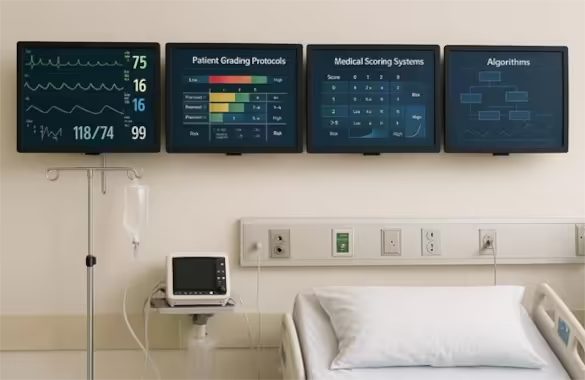
8. SCORING AND GRADING IN ANESTHESIA
Anesthesia Machine & Anesthesia Workstation
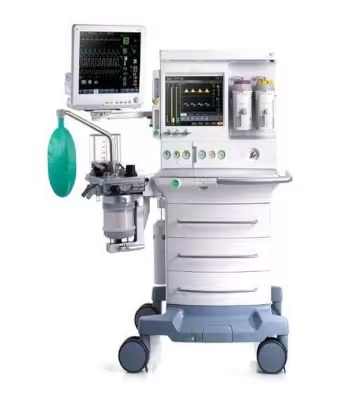 Welcome to the nerve center of the operating room. The anesthesia workstation, with its complex array of dials, circuits, and monitors, can seem like an intimidating beast. But what if you could master it? This comprehensive resource is your guide on a fascinating journey—from the historic, clunky elegance of the Boyle's machine to the sleek, intelligent workstations of Dräger, GE, and Mindray that define modern practice. We will demystify the physics, deconstruct the components, and build your confidence. This isn't just about learning a machine; it's about understanding your most critical partner in ensuring patient safety.
Our journey will be a methodical one. We'll start by laying a strong foundation, exploring the history and the core physics that govern every machine. From there, we'll build up your knowledge piece by piece, dissecting the classic anatomy of an anesthesia machine and mastering the circle breathing system. Only then will we leap into the modern era, comparing the sophisticated features of today's leading workstations. Each module is designed to build upon the last, transforming a daunting subject into a clear, manageable, and ultimately, masterable skill.
Laryngeal Mask Airway (LMA)
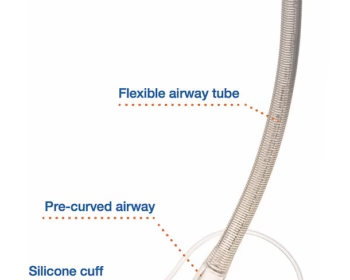
The Laryngeal Mask Airway (LMA) is a cornerstone of modern anesthesia, representing one of the most significant advances in airway management since the endotracheal tube.
Stylet & Gum Elastic Bougie: Essential Tools in Airway Management
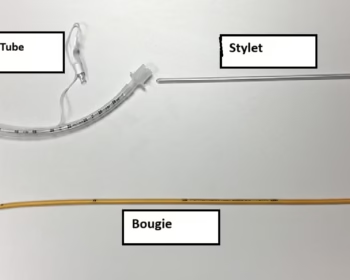
In the practice of anesthesia, securing a definitive airway through endotracheal intubation is one of the most critical skills. While direct laryngoscopy is the standard technique, anesthesiologists often encounter challenging anatomies that require specialized tools. Among the most fundamental and widely used of these are the stylet and the gum elastic bougie (GEB).
Balanced Anesthesia: The Modern Standard of Care
Balanced Anesthesia is not a specific drug but rather a technique or philosophy that involves the careful combination of multiple anesthetic agents—each with a different primary function—to achieve the optimal state for surgery. The goal is to create a “balanced” state where the patient is safely anesthetized with minimal physiological disruption and side effects.
Inhalational Induction of Anesthesia
Inhalational induction of anesthesia is the process of transitioning a patient from a state of consciousness to unconsciousness solely by having them inhale a volatile anesthetic agent. This method stands in contrast to the more common intravenous (IV) induction, where anesthetic drugs are injected directly into the bloodstream.
A Resident’s Guide to Spinal Anesthesia: From Theory to Practice
Section 1: The Anatomical and Physiological Foundation Spinal anesthesia, or subarachnoid block (SAB), is one of the most fundamental and valuable skills in our armamentarium. It provides excellent, rapid-onset anesthesia for a wide variety of surgical procedures. Mastering it requires a deep understanding of the underlying anatomy, pharmacology, and a…
Intravenous Induction of Anesthesia
IV induction rapidly induces unconsciousness (15–60 sec) via intravenous drugs, enabling airway management. Preferred for speed, predictability, and patient comfort, it avoids inhalational agents’ irritancy. Key advantages include precise titration, hemodynamic control, and suitability for rapid sequence intubation (RSI). It remains the standard for adult anesthesia induction.
Epidural Anesthesia
Master epidural anesthesia fundamentals with our comprehensive guide covering anatomy, physiology, indications, contraindications, and pharmacology. Essential knowledge for anesthesia residents to understand this versatile regional technique used in obstetrics, surgery, and pain management. Perfect for exam preparation and clinical practice.
Nitrous Oxide
Nitrous oxide (N₂O) is frequently encountered in today’s clinical practice. This colorless, non-flammable gas has a fascinating history and remains one of the oldest anesthetic agents still in use today. It was first synthesized by English chemist Joseph Priestley in 1772, though he didn’t recognize its potential medical applications.
Disclaimer!
The information provided on this platform, including but not limited to articles, case studies, clinical scenarios, guidelines, and multimedia content, is intended for educational and informational purposes only.
The authors and editors of this material have made every effort to ensure the accuracy of treatments, drugs, and dosage regimens that conform to currently accepted standards. However, due to continual changes in information resulting from ongoing research and clinical experience, unique aspects of individual clinical situations, as well as the potential for human error; readers must exercise personal judgment when making a clinical decision.
This website may contain third-party information or links to other internet websites. We do not control nor assume responsibility for any third-party content provided nor content on linked Internet websites.
We strongly recommend the visitors of this website to go through its Detailed 'Disclaimer' and 'Terms of Use'.
By accessing, browsing, or using this website, you acknowledge that you have read, understood, and agreed to be bound by the 'Disclaimer' and 'Terms of Use'. If you do not agree with these terms, you must NOT use this website.