


Crack ‘The Core’ - 9 Key Sections Every Anaesthesia Student Should Master
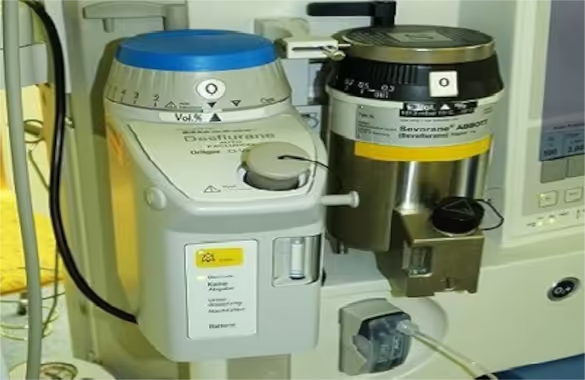
INSTRUMENTS & EQUIPMENT USED DURING ANESTHESIA
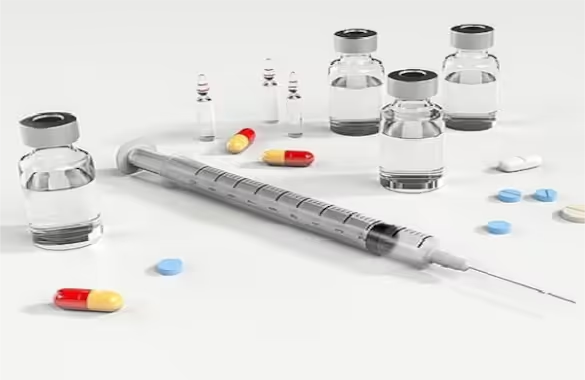
ANESTHESIA PHARMACOLOGY & DRUGS
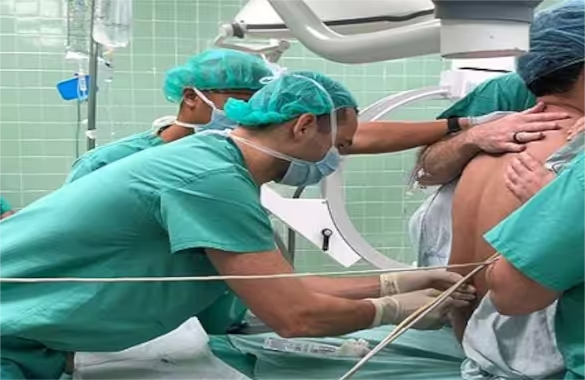
PROCEDURES IN ANESTHESIA PRACTICE
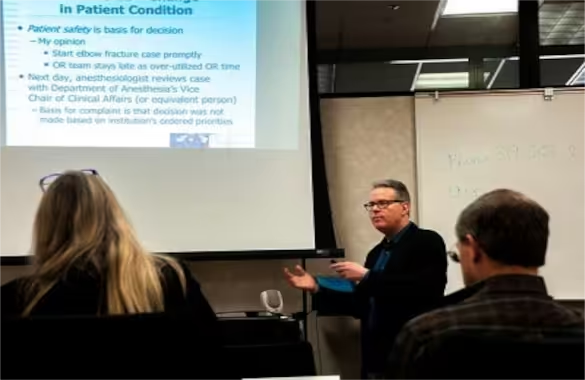
PRESENTATIONS IN ANESTHESIOLOGY
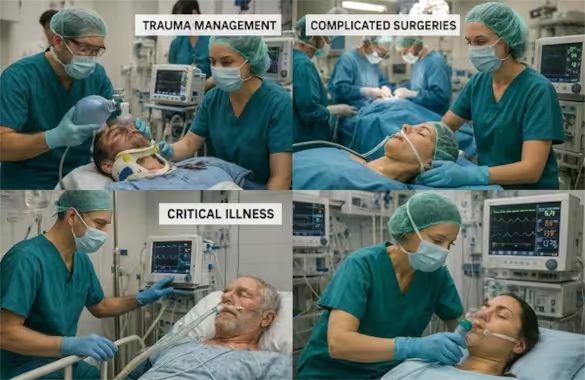
CLINICAL SCENARIOS DURING ANESTHESIA
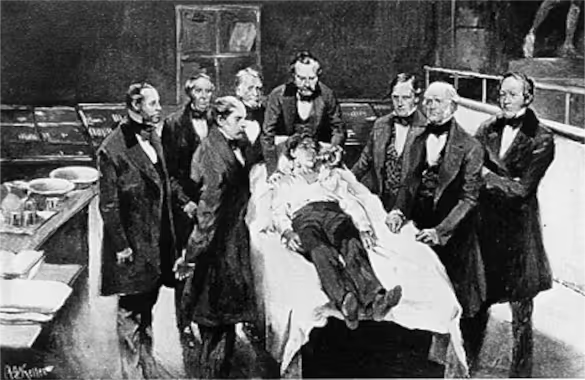
HISTORY OF ANESTHESIA

ANESTHESIA CLINICAL CALCULATOR
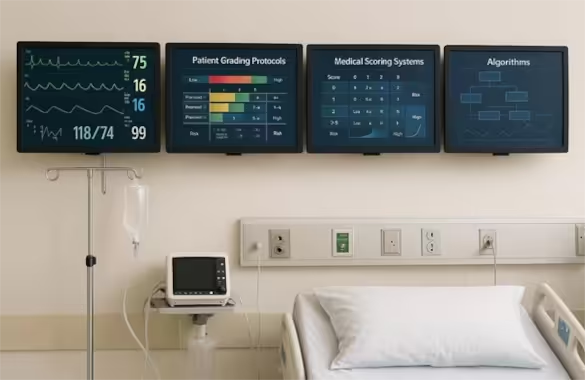
SCORING AND GRADING IN ANESTHESIA
Anesthesia Machine & Anesthesia Workstation
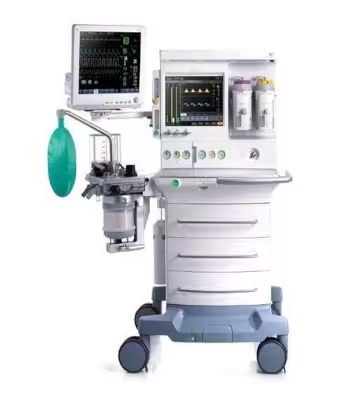 Welcome to the nerve center of the operating room. The anesthesia workstation, with its complex array of dials, circuits, and monitors, can seem like an intimidating beast. But what if you could master it? This comprehensive resource is your guide on a fascinating journey—from the historic, clunky elegance of the Boyle's machine to the sleek, intelligent workstations of Dräger, GE, and Mindray that define modern practice. We will demystify the physics, deconstruct the components, and build your confidence. This isn't just about learning a machine; it's about understanding your most critical partner in ensuring patient safety.
Our journey will be a methodical one. We'll start by laying a strong foundation, exploring the history and the core physics that govern every machine. From there, we'll build up your knowledge piece by piece, dissecting the classic anatomy of an anesthesia machine and mastering the circle breathing system. Only then will we leap into the modern era, comparing the sophisticated features of today's leading workstations. Each module is designed to build upon the last, transforming a daunting subject into a clear, manageable, and ultimately, masterable skill.
Epinephrine

Epinephrine is the adrenal medulla’s principal hormone — ~80% of adrenal catecholamine output. It is synthesized from norepinephrine via the enzyme PNMT, which is upregulated by cortisol arriving through intra-adrenal portal vessels
Norepinephrine
Norepinephrine (NE) is the postganglionic sympathetic neurotransmitter — endogenously synthesized from tyrosine → DOPA → dopamine → NE (via dopamine β-hydroxylase) → epinephrine (via PNMT, in the adrenal medulla). The adrenal medulla secretes ~20% of its catecholamine output as NE
Pressure Infuser Bag
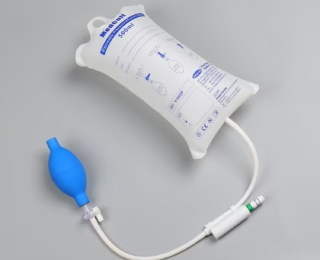
Pressure infuser bags turn a gravity drip into a firehose, delivering fluids at up to 1000 mL/min by applying 300 mmHg of external pressure. However, this speed introduces lethal risks: never let a pressurized bag run dry to avoid a massive air embolism, and always ensure large-bore, kink-free IV access.
Fluid and blood warmers
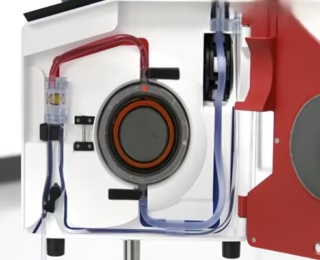
Infusing room-temperature crystalloids or refrigerated blood acts as an internal ice bath, rapidly driving hypothermia and coagulopathy. Fluid and blood warmers are essential for core temperature defense, but residents must remember that output heat is flow-rate dependent, and exceeding 40°C risks fatal red blood cell hemolysis.
Intravenous Fluids (Crystalloids, Colloids)
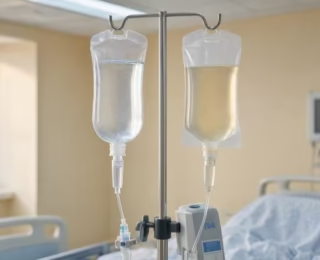
Modern fluid management hinges on protecting the endothelial glycocalyx. Default to balanced crystalloids like Lactated Ringer’s over Normal Saline to prevent hyperchloremic metabolic acidosis and acute kidney injury. Reserve albumin for specific hypoalbuminemic states, and avoid synthetic colloids like HES due to severe renal and coagulopathic risks.
Intraosseous (IO) Drill & Needles
When IV access fails in a crashing patient, the intraosseous (IO) drill is an anesthesiologist’s ultimate lifeline. By penetrating the bone’s medullary cavity, it provides immediate access to the central circulation for drugs and fluids. Remember to stabilize the limb, stop at the flange, and always flush.
Anesthesia Vaporizers
Modern variable-bypass vaporizers like the Dräger Vapor 2000 and GE Tec 7 rely on mechanical dials and agent-specific keyed fillers to prevent errors. In contrast, the GE Aladin system utilizes a disposable cassette and a computer-controlled stepper motor to electronically adjust the splitting ratio, offering advanced compensation.
Difficult Airway Society Intubation Algorithm (DAS Algorithm)
The DAS Intubation Algorithm provides a structured approach to unanticipated difficult airways: Plan A (tracheal intubation, max 3 attempts), Plan B (SAD insertion), Plan C (facemask ventilation), and Plan D (emergency front-of-neck airway). The algorithm emphasises maximising first-pass success, continuous oxygenation, human factors, and rapid progression through plans.
Disclaimer!
The information provided on this platform, including but not limited to articles, case studies, clinical scenarios, guidelines, and multimedia content, is intended for educational and informational purposes only.
The authors and editors of this material have made every effort to ensure the accuracy of treatments, drugs, and dosage regimens that conform to currently accepted standards. However, due to continual changes in information resulting from ongoing research and clinical experience, unique aspects of individual clinical situations, as well as the potential for human error; readers must exercise personal judgment when making a clinical decision.
This website may contain third-party information or links to other internet websites. We do not control nor assume responsibility for any third-party content provided nor content on linked Internet websites.
We strongly recommend the visitors of this website to go through its Detailed 'Disclaimer' and 'Terms of Use'.
By accessing, browsing, or using this website, you acknowledge that you have read, understood, and agreed to be bound by the 'Disclaimer' and 'Terms of Use'. If you do not agree with these terms, you must NOT use this website.