


Crack ‘The Core’ - 9 Key Sections Every Anaesthesia Student Should Master
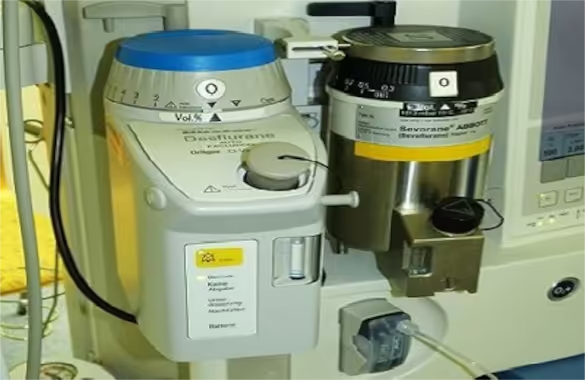
INSTRUMENTS & EQUIPMENT USED DURING ANESTHESIA

ANESTHESIA PHARMACOLOGY & DRUGS
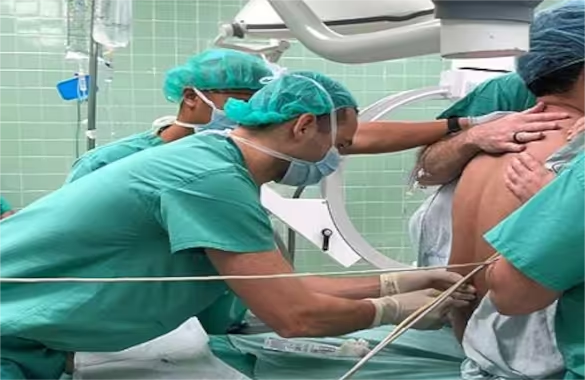
PROCEDURES IN ANESTHESIA PRACTICE
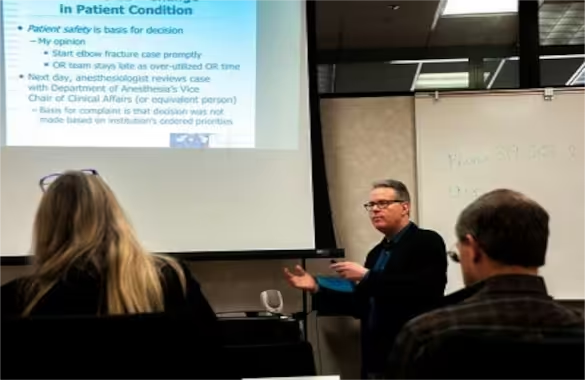
PRESENTATIONS IN ANESTHESIOLOGY
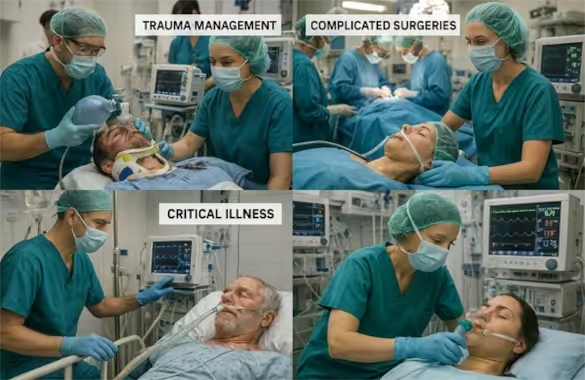
CLINICAL SCENARIOS DURING ANESTHESIA
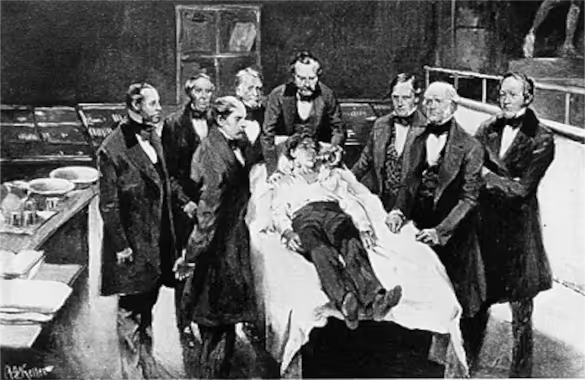
HISTORY OF ANESTHESIA

ANESTHESIA CLINICAL CALCULATOR
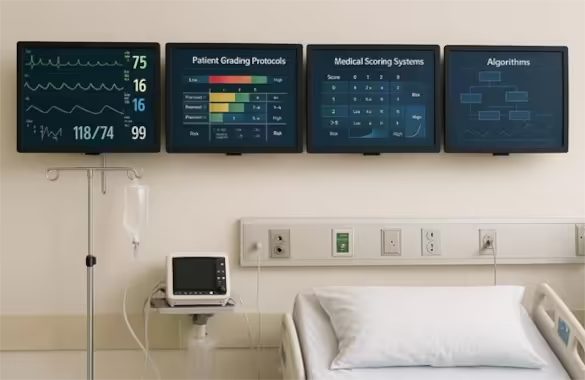
SCORING AND GRADING IN ANESTHESIA
Anesthesia Machine & Anesthesia Workstation
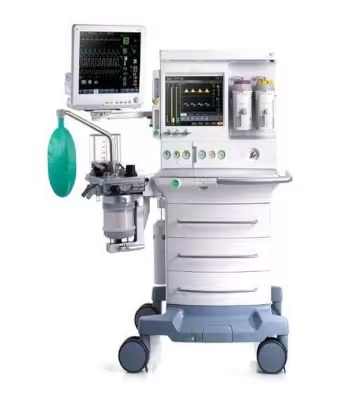 Welcome to the nerve center of the operating room. The anesthesia workstation, with its complex array of dials, circuits, and monitors, can seem like an intimidating beast. But what if you could master it? This comprehensive resource is your guide on a fascinating journey—from the historic, clunky elegance of the Boyle's machine to the sleek, intelligent workstations of Dräger, GE, and Mindray that define modern practice. We will demystify the physics, deconstruct the components, and build your confidence. This isn't just about learning a machine; it's about understanding your most critical partner in ensuring patient safety.
Our journey will be a methodical one. We'll start by laying a strong foundation, exploring the history and the core physics that govern every machine. From there, we'll build up your knowledge piece by piece, dissecting the classic anatomy of an anesthesia machine and mastering the circle breathing system. Only then will we leap into the modern era, comparing the sophisticated features of today's leading workstations. Each module is designed to build upon the last, transforming a daunting subject into a clear, manageable, and ultimately, masterable skill.
Ralph Milton Waters
Ralph Waters established the first academic anaesthesia department at the University of Wisconsin. His rigorous residency model trained a generation of leaders who spread his standards worldwide. He pioneered carbon dioxide absorption and the cuffed endotracheal tube. His mentorship and professionalism transformed anaesthesia into a respected medical specialty.
Crawford Long
Crawford Long performed the first surgical operation using ether anaesthesia on March 30, 1842, in rural Georgia. He observed painlessness at social “ether frolics” and applied this insight clinically. Although he did not publish until 1849, his priority is now recognised. Doctors’ Day commemorates his pioneering contribution annually.
Joseph Clover
Joseph Clover revolutionised anaesthesia safety through ingenious mechanical devices. He designed the first reliable chloroform apparatus and a portable ether inhaler. He administered anaesthetics over 13,000 times with only one reported fatality. His precision, honesty, and commitment to monitoring set enduring standards for every anaesthesia trainee today.
James Young Simpson
James Young Simpson revolutionised surgery by introducing chloroform in 1847. He replaced messy ether with a faster, more pleasant agent. Despite fierce religious opposition, he defended anaesthesia with wit and logic. His self-experimentation, teaching, and safety advocacy set enduring standards. Today, his name honours every painless procedure performed worldwide.
William Thomas Green Morton
William T. G. Morton demonstrated the first successful public use of ether as a surgical anaesthetic on October 16, 1846, at the Massachusetts General Hospital. The patient felt no pain during tumour removal. Despite bitter priority disputes, Morton’s “Ether Day” launched modern anaesthesiology and transformed surgery forever. He died impoverished but his legacy endures.
The Birth of Anaesthesia as a Medical Specialty
For decades after 1846, anaesthesia was administered by untrained personnel. John Snow and Joseph Clover were pioneering exceptions. The Association of Anaesthetists was founded in 1932; the Diploma in Anaesthetics followed in 1935. Ralph Waters established the first academic department in 1927. Anaesthesia became a recognised specialty through visionary pioneers, professional organisation, and institutional recognition.
Key Figures in Anaesthesia
From Morton’s bold ether demonstration to Snow’s scientific precision, from Simpson’s chloroform discovery to Griffith’s curare revolution, visionary pioneers transformed anaesthesia. Magill mastered the airway, Waters built academic foundations, and Bonica founded pain medicine. Virginia Apgar saved newborns. These remarkable individuals conquered pain, advanced safety, and built the specialty we practise today.
The Future of Anaesthesia: A History in the Making
Artificial intelligence, personalised medicine, and non-invasive monitoring are transforming anaesthesia. Ultrasound guidance and ERAS protocols are improving outcomes. Sustainability and tele-anaesthesia address global challenges. Robotics and automation are entering practice. The role of the anaesthetist is evolving rapidly. The future of anaesthesia is being written today in laboratories and operating theatres worldwide.
Disclaimer!
The information provided on this platform, including but not limited to articles, case studies, clinical scenarios, guidelines, and multimedia content, is intended for educational and informational purposes only.
The authors and editors of this material have made every effort to ensure the accuracy of treatments, drugs, and dosage regimens that conform to currently accepted standards. However, due to continual changes in information resulting from ongoing research and clinical experience, unique aspects of individual clinical situations, as well as the potential for human error; readers must exercise personal judgment when making a clinical decision.
This website may contain third-party information or links to other internet websites. We do not control nor assume responsibility for any third-party content provided nor content on linked Internet websites.
We strongly recommend the visitors of this website to go through its Detailed 'Disclaimer' and 'Terms of Use'.
By accessing, browsing, or using this website, you acknowledge that you have read, understood, and agreed to be bound by the 'Disclaimer' and 'Terms of Use'. If you do not agree with these terms, you must NOT use this website.